Posts

The modern factory was first invented, or at least credited, to the work of Richard Arkwright. Arkwright patented a water frame in 1769 before building the Cromford Mill, one of the first prototype manufacturing facilities as well as the first successful cotton-spinning factory on the planet.

Nearly 200 years after Arkwright would help to pioneer manufacturing warehouses, the world would be introduced to Computer Numerical Control Machining, otherwise known as CNC Machining.

Understanding CNC Machining

CNC Machining is a popular form of manufacturing relied upon for quick, accurate, and high-level material production. The process of CNC machining was brought to fruition by Richard Kegg in 1952 during a project in collaboration with MIT.  Kegg and his team at MIT would work in concert to develop the Cincinnati Milacron Hydrotel, the first of many prominent pieces of CNC Machining technology. Now, decades later, that same model is utilized by manufacturing facilities around the world

CNC Machining can be accomplished in several different ways. With that being said, there are three core types of CNC machining to be made aware of.

  1. CNC Milling – This form of machining was brought to life by Richard Kegg. CNC Milling is a process that involves mounting and mixing with rotational cutting tools. Materials are cut and removed by the rotating tools to craft many shapes at a rapid pace.
  2. CNC Turning – CNC turning is a manufacturing process that involves bars of material held in place by a chuck. This material is turned by the chuck in a rotation whereupon it is fed into the tool until the desired shape has been crafted.
  3. EDM   – Also known as Electrical Discharge Machining, EDM is a type of metal fabrication process that leans on electrical sparks to shape the targeted material. Typically, this involves voltage being released between two electrodes until an electric arc is produced.

3 Key Benefits to CNC Machining

If you are looking for a reason to add CNC machining processes to your manufacturing facility, you can take your pick. CNC machining took hold in the 50s and still exists to this day. There are a variety of reasons that warehouses are continuing to turn to professional CNC machining solutions, including the following three reasons.

  1. Highly Efficient – CNC Machining requires fewer steps in the production process, thus allowing for a quick turnaround on all production processing.
  2. Advanced Software – Put control into the hands of your computer. CNC machines use CAD software that provides a multitude of functions and options that other processes cannot match.
  3. Automated System – Fully automated systems mean that your operators don’t have to expose themselves to the job. Step back and watch over the machine from a safe distance as the process handles itself.

Working with CNC machining processes allows individuals to manipulate a variety of common and popular materials including aluminum, stainless steel, and brass among others.
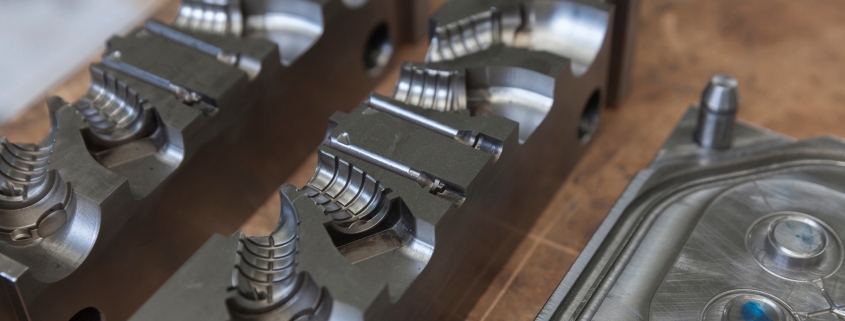
 

Injection molds are meant to make manufacturing easier and increase productivity. Of course, that’s only when the right one for each project is purchased. The wrong fit or design can result not only months of lost work and delayed production, but damage to the equipment itself. With this in mind, here are 6 tips you should consider when purchasing injection molds:

1. Timing Depends on the Project

For some projects, a general injection mold will do, and you will not need to plan too far ahead during the design process. But for more creative projects that depend on precision, you will need to start planning the mold design early on in product development. If it is a complete custom design or a rarely-seen one, you will need to allow for more time for both design and approval.

2. Collaboration is Key

The most successful and creative projects are when the part designer, mold fabricator and injection molder are able to communicate efficiently and collaborate. After all, you don’t want to go ahead and approve a mold design only to find out that it cannot be made to specifications or that it won’t actually function as the injection molder needs it to. Though taking the time to communicate every step of the process may feel like it’s taking extra time, it can save you a lot of time (and money) later on.

3. Anticipate Issues

Even the best planning can sometimes end up in errors, but you don’t need to let it take you completely off guard. Plan (set aside extra time and funds) for potential re-cuts, for example. You may need the mold to be adjusted a few times before the plastic portions are brought into the exact range they need to be in. You may even need to resize the design in general at some point.

4. Prepare Your Production Floor Team

Even the most efficient production / shop floor teams will appreciate advance notice for when any new injection molds are going to arrive. They will need time to install the mold where it needs to go and make sure it is connected properly. They will need to check a number of things like lift straps, hot runner and coolant controllers, heater plugs and cables, water manifold ports, fittings, hoses, bolts, and more. This cannot properly be done at the last minute.

5. Standardize Designs that Work for You

Many people wind up needing the same injection mold later on. You can maximize both cost savings and efficiency by making the design standardized. Additionally, standardizing different features like clamp slots and connection locations on different machinery can also save you both time and money (especially if you need to relocate the injection mold later on).

6. Cost Savings May Not Always Be Worth It

Even more basic injection molds require a high degree of craftsmanship and precision. While you may be able to trim costs on many projects by going with cheaper options, it is crucial to really evaluate whether or not you can afford small errors or misalignments on your current one. Even small savings can end up costing you big time down the road if it means having to scrap a ton of used up material or tools and having to spend more on labor costs.