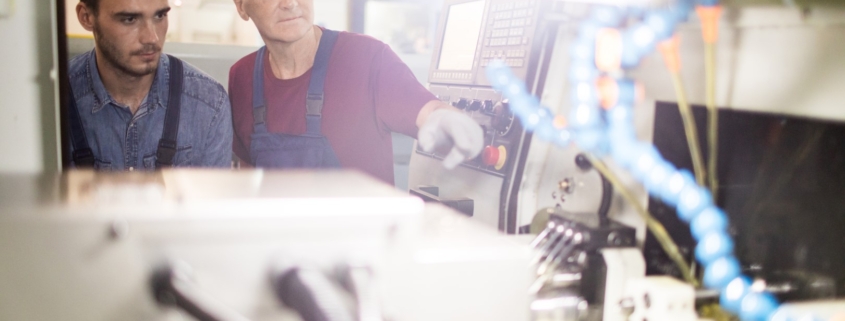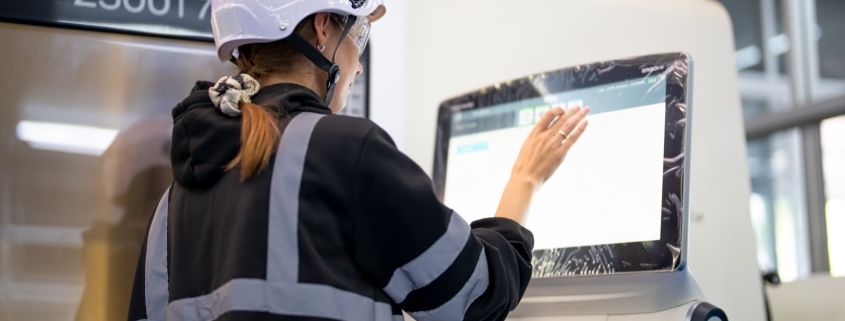
Modern plastic components often require far more than simple cuts, holes, or flat surfaces. Medical devices, laboratory equipment, semiconductor systems, and advanced industrial assemblies may include complex contours, channels, threads, angled features, and tight dimensional requirements. Multi-axis CNC machining for plastic parts gives manufacturers the flexibility to produce these sophisticated components with exceptional accuracy and repeatability.
At Acrylic Art, advanced CNC machining combines precision equipment with decades of plastic manufacturing experience. This approach helps engineers turn demanding designs into reliable prototypes, production parts, and finished assemblies.
What Is Multi-Axis CNC Machining for Plastic Parts?
Traditional CNC machining commonly moves a cutting tool along three primary axes. Multi-axis machining adds additional positioning capabilities. Therefore, the machine can approach a component from more angles without repeatedly removing and repositioning the workpiece.
This flexibility becomes especially valuable when producing complex plastic parts. A single component may require pockets, curved surfaces, angled holes, threaded ports, or features on several sides.
Multi-axis CNC machining can simplify these operations. Consequently, manufacturers can reduce setups while maintaining tighter relationships between critical features.
For engineers, this creates greater design freedom. It also makes advanced plastic components more practical to manufacture consistently.
Why Multi-Axis Machining Matters for Complex Plastic Components
Plastic machining presents challenges that differ from metalworking. Different polymers react uniquely to heat, cutting pressure, vibration, and tooling. Additionally, dimensional stability can become critical when producing components with thin walls or detailed geometries.
Experienced machinists must understand both CNC technology and plastic material behavior.
Multi-axis machining offers several advantages for demanding applications. First, fewer setups can reduce opportunities for positioning errors. Additionally, complex surfaces can often be machined more efficiently. The process can also maintain accurate relationships between holes, channels, pockets, and other features.
As a result, multi-axis CNC machining for plastic parts can support both intricate geometry and repeatable production.
Advanced Plastic Materials Require Specialized Experience
The correct material depends heavily on how a finished component will perform. Some applications require optical clarity. Others prioritize chemical resistance, dimensional stability, strength, electrical properties, or temperature performance.
Acrylic Art machines an extensive range of conventional and high-performance plastics. These materials include acrylic, Delrin, polycarbonate, nylon, PEEK, PTFE, UHMW, Ultem, Torlon, and many others.
However, selecting a material involves more than choosing from a list. Machining characteristics must also factor into the decision.
For example, engineers may need to consider wall thickness, tolerances, surface finish, operating environment, and assembly requirements. Acrylic Art can provide material analysis and design recommendations to help customers make informed production decisions.
Producing Tight-Tolerance Plastic Parts
Advanced components often depend on small dimensional differences. A manifold port, sealing surface, mating feature, or precision bore may need to match another component closely.
Acrylic Art’s CNC machining capabilities can achieve dimensional tolerances as tight as ±0.001 inches for applicable projects. Therefore, customers can use precision machining for demanding parts where consistency matters.
The company’s capabilities include complex contouring, 3D milling, rapid machining, thread milling, and helical interpolation. Furthermore, CAD/CAM integration allows customer design files to move efficiently into the machining process.
This digital workflow can reduce unnecessary translation between design and production. More importantly, it helps preserve the engineer’s intended geometry throughout manufacturing.
Applications Across Advanced Industries
Multi-axis CNC machining is valuable anywhere intricate plastic components must perform reliably.
Medical and biotechnology applications may require manifolds, chambers, fixtures, instrument components, or research equipment. Meanwhile, semiconductor and cleanroom environments often demand precisely machined parts with specialized material properties.
Aerospace, electronics, instrumentation, pharmaceutical, and industrial equipment manufacturers can also benefit from precision plastic machining.
Acrylic Art has produced components for many of these demanding environments. Its project experience includes CNC-machined Delrin manifolds, polycarbonate induction assemblies, acrylic chambers, calibration equipment, and pharmaceutical research components.
That practical manufacturing experience matters because advanced designs rarely present identical challenges.
From Prototype Development to Production
Multi-axis machining also offers important advantages during product development.
Engineering teams frequently need to evaluate a physical component before approving a larger production run. CNC machining allows designers to start with a CAD model, manufacture a functional component, evaluate its performance, and adjust the design when necessary.
Those changes can then be incorporated into updated machining programs. Therefore, prototypes can evolve without requiring expensive dedicated tooling for every revision.
Once the design is finalized, the same precision-driven manufacturing approach can support short- or longer-run production requirements.
Acrylic Art also provides additional fabrication capabilities, including cutting, heat bending, solvent welding, polishing, and hardware assembly. As a result, customers can work with one experienced manufacturing partner for more complete plastic components and assemblies.
Choosing the Right CNC Machining Partner
Equipment alone does not guarantee a successful precision plastic component. The manufacturing team must also understand material behavior, tooling, tolerances, design intent, and final application requirements.
Acrylic Art combines advanced machining technology with more than three decades of plastics manufacturing experience. The company works closely with customers from specifications and CAD files through machining, fabrication, finishing, and assembly.
Additionally, Acrylic Art’s focus on close-tolerance plastic manufacturing makes the company a valuable resource for engineers developing sophisticated parts.
When a project involves unusual geometry or demanding material requirements, early manufacturing input can also uncover opportunities to improve manufacturability before production begins.
Bring Your Complex Plastic Part Designs to Acrylic Art
Advanced products require manufacturing capabilities that can keep pace with increasingly sophisticated designs. Multi-axis CNC machining for plastic parts provides the accuracy, flexibility, and repeatability needed for complex components across medical, biotech, semiconductor, aerospace, research, and industrial applications.
Acrylic Art brings together precision CNC technology, extensive plastics expertise, CAD/CAM capabilities, and a broad range of fabrication services. Whether you need a specialized prototype or an ongoing production solution, their team can help turn complex designs into high-quality finished components.
Contact us at Acrylic Art to discuss your drawings, material requirements, tolerances, and production goals. Their experienced team can help determine the right approach for your next precision plastic machining project.